


How the Gut-Brain Axis Shapes Appetite Control (and Why Most Gut Health Supplements Miss the Mark)
I want to start by being completely honest with you: if you feel like you are constantly fighting your own body when it comes to food, it is not a lack of willpower. It is biology.
For years, we’ve been told that managing our weight is just about trying harder. But what if the real conversation needs to happen much deeper inside your body? What if the key to genuine appetite control lies in how your gut and your brain talk to each other?
As a scientist who has spent over a decade studying the human digestive system, I can tell you that your gut is doing a lot more than just breaking down lunch. It is actively sensing what you eat and sending powerful messages to your brain.
Let's explore the science of how this works, and why understanding it could change your relationship with food forever.
What You Might Be Experiencing Right Now
If your gut and brain aren't communicating effectively, you feel it every single day.
You probably know the signs all too well. It’s that loud, persistent "food noise" that makes it hard to focus on anything else. It’s the intense cravings for sugar or high-fat foods that hit you at 3 PM, or the frustration of never quite feeling satisfied after a perfectly normal meal.
When your hunger cues are constantly firing, and your body isn't registering that you've eaten enough, you end up locked in a cycle of snacking, overeating, and feeling guilty.
You might have tried restricting calories, white-knuckling your way through diets, or taking various supplements, only to find that the cravings regulation you desperately need just isn't there.
You are not alone in this, and more importantly, there is a physiological reason behind it. It all comes down to a communication breakdown in your digestive tract.
The Science of Satiety, Explained Simply
Long before Elcella was even a concept, my co-founder, Dr. Rubina Aktar, and I were academic researchers at the Wingate Institute at Queen Mary University of London. We were on a mission to understand how the gut works at a microscopic level. We didn't study rats or mice; we studied real human gut tissue, donated from the stomach all the way down to the rectum.
What we, and the broader scientific community, discovered is nothing short of game-changing: your gut can essentially "taste" food, just like your tongue does.
The lining of your intestine is packed with millions of specialised nutrient sensors called enteroendocrine L-cells. When these cells detect certain nutrients, they release powerful hormones, most notably GLP-1 and PYY. Unlike your tongue, which tells your brain what tastes delicious, these L-cells send fullness signals to your brain. They tell you when it’s time to stop eating.
Here is the critical part: in individuals who struggle with obesity or chronic weight issues, there is often a "satiety signal deficit". Studies show that the gut releases significantly less GLP-1 and PYY after eating compared to individuals of a healthy weight. The very hormones that are supposed to help you stop eating and maintain your appetite balance are impaired. Without these signals, your brain genuinely believes you need more food.
Read about these studies here!
Why Traditional Gut Health Supplements Don’t Address This
When most people think of gut health, they think of probiotics, prebiotics, and fiber. These are fantastic for supporting your microbiome, aiding digestion, and reducing bloating. However, standard gut supplements are not designed to trigger the specific hormonal pathways required for robust appetite control.
Traditional supplements focus on the environment of the gut, but they don't provide the specific molecular "keys" needed to unlock the nutrient-sensing receptors on your L-cells.
They don't facilitate the precise gut communication needed to release GLP-1 and PYY. Furthermore, even if you eat a diet rich in healthy fats and nutrients, your body typically absorbs them very early in the digestive process (in the stomach and upper intestine). By the time the digested food reaches the lower gut, where the vast majority of those hormone-releasing L-cells live, the potent nutrients are gone. There is nothing left to trigger the receptors.
This is where the traditional approach falls short. We realised we needed a way to deliver the right nutrients directly to the end of the line.
How Lower-Gut Signalling Works
In 2015, our research team published a foundational paper in the medical journal Gut. Up until then, the conventional thinking was that nutrient absorption and sensing happened mostly in the stomach and small intestine. Our data turned that upside down.
We proved that the distal gut (the colon and rectum) is a major nutrient-sensing organ. It is densely packed with those L-cells we talked about. We also discovered that different types of nutrients activate distinct receptors on these cells:
GPR84: A receptor that acts as a sensor for medium-chain fatty acids (like those found in coconut and MCT oils).
FFAR4: A receptor that responds to long-chain fatty acids (like those found in flaxseed oil).
Interestingly, there is a rare genetic condition where people are born without the FFAR4 receptor and almost all of them struggle with severe obesity. This proves how vital this specific gut signalling pathway is for maintaining a healthy weight.
I had a hunch: if we could find a way to activate both the GPR84 and FFAR4 receptors at the exact same time, on the same cell, we could create a synergistic effect. When we tested this in the lab, combining medium-chain and long-chain fatty acids, the results were astounding. The release of GLP-1 and PYY more than doubled compared to using just one nutrient alone. We had found a natural way to amplify the body's own satiety signals.
Where Elcella Fits In

We didn't want to create just another supplement; we wanted to create a targeted lower-gut support system based directly on our clinical findings. But we faced a massive hurdle: how do we get these specific fatty acids (flaxseed oil, coconut oil, and MCT oil) all the way to the colon without them being digested and destroyed in the stomach first?
We worked with formulation experts to engineer a specialised, pH-sensitive capsule. It is designed to stay completely intact through the highly acidic stomach and the upper intestine. It only dissolves when it reaches the specific, slightly alkaline environment of the terminal ileum and colon (pH 7.0-7.5).
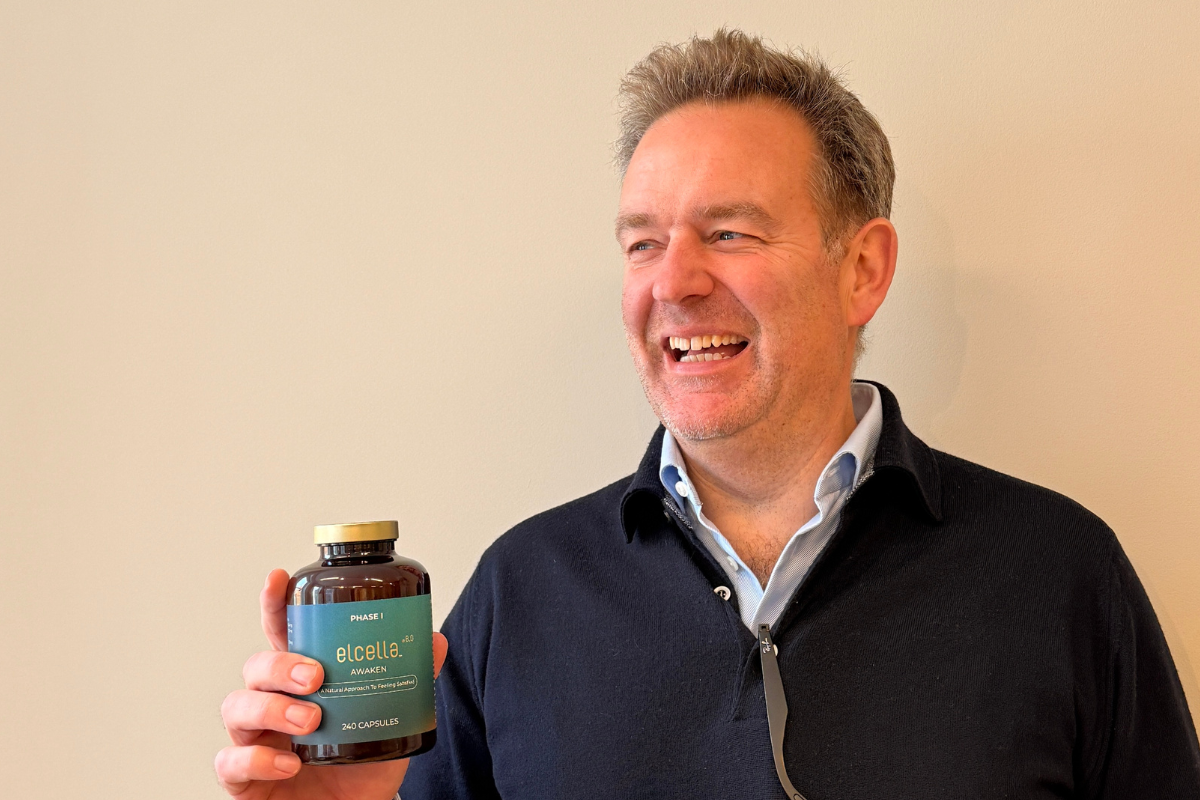
This is the science behind Elcella. It delivers the precise nutrients needed to "wake up" your colonic L-cells, encouraging your body to release its own natural GLP-1 and PYY.
We didn't just rely on lab data; we put it to the test in human trials:
The Clinical Trial: We ran a randomised, placebo-controlled, cross-over study with 20 adults with obesity. When participants took our targeted capsule, they ate significantly fewer calories (about 12.5% less) across their meals. Blood tests confirmed that their levels of GLP-1 and PYY went up, and their appetite was noticeably reduced—all in a single day.
The Consumer Trial: In a 12-week trial with 53 participants, the real-world results mirrored the lab. Participants lost an average of 6 kg (13.2 lbs) and saw a 7 cm (2.8 inches) reduction in their waistlines. Even more importantly, 94% reported better appetite control and thinking less about food, with massive drops in cravings for sugar, carbs, and high-fat takeaways. Unpublished - awaiting patent protection.
Elcella isn't tricking your body with synthetic chemicals or fixing a deficiency; it is simply delivering the right natural nutrients to the right place, at the right time, to support your own biology.
Protocol Overview
To get the most out of this science, consistency and timing are key. We structure the use of Elcella into a clear protocol:
8 capsules: In the initial phase, your goal is to consistently deliver these nutrients to the lower gut to begin re-engaging those dormant L-cells. You take the capsules twice a day, to ensure a steady delivery of fatty acids to the colon, helping to blunt the midday and evening cravings.
4 Capsules: As your body adapts and your natural hormone release becomes more robust, you move into a maintenance phase. Here, the focus is on long-term appetite control and metabolic balance, using the capsules to support healthy portion sizes and quiet the food noise so you can make mindful dietary choices without feeling restricted.
Empowering Your Biology
The research into the gut-brain axis is still ongoing, and every day we are learning more about how our bodies regulate energy. But the science is already clear on one thing: fighting your biology is a losing battle.
True, sustainable appetite control doesn't come from punishing yourself or starving your body. It comes from understanding how your gut communicates with your brain and giving it the precise support it needs to function optimally. By targeting the lower gut and stimulating your natural satiety hormones, you can finally step away from the noise and build a healthier, more peaceful relationship with food. And it all starts exactly where it should: in the gut.


Leave a comment
This site is protected by hCaptcha and the hCaptcha Privacy Policy and Terms of Service apply.